TOTAL PRAISE: The Sound, The Standard, The Steward
“Excellence is not elitism, excellence is stewardship.” Those words from Rev. Dr. H. Beecher Hicks Jr., Senior Servant Emeritus of Metropolitan Baptist Church, feels especially true when reflecting on the life and legacy of Richard Smallwood, who transitioned on December 30, 2025, at the age of 77.
When we talk about gospel legends who not only shaped the sound of worship but elevated the entire fabric of sacred music, Richard Smallwood is a name that must be spoken. His contribution was not just in song, but in structure, in spirit, in standard. Smallwood was a classically trained composer, arranger, pianist, and music director whose work defied boundaries. While classical training often centers precision and restraint, Smallwood took that foundation and infused it with feeling. His music wasn’t about strictly following formulas, it was about honoring the divine through a sound that felt deeply ancestral. You could hear the ones who came before him in every note, their sparrows, their celebrations, their pain and praise, flowing effortlessly through each composition.
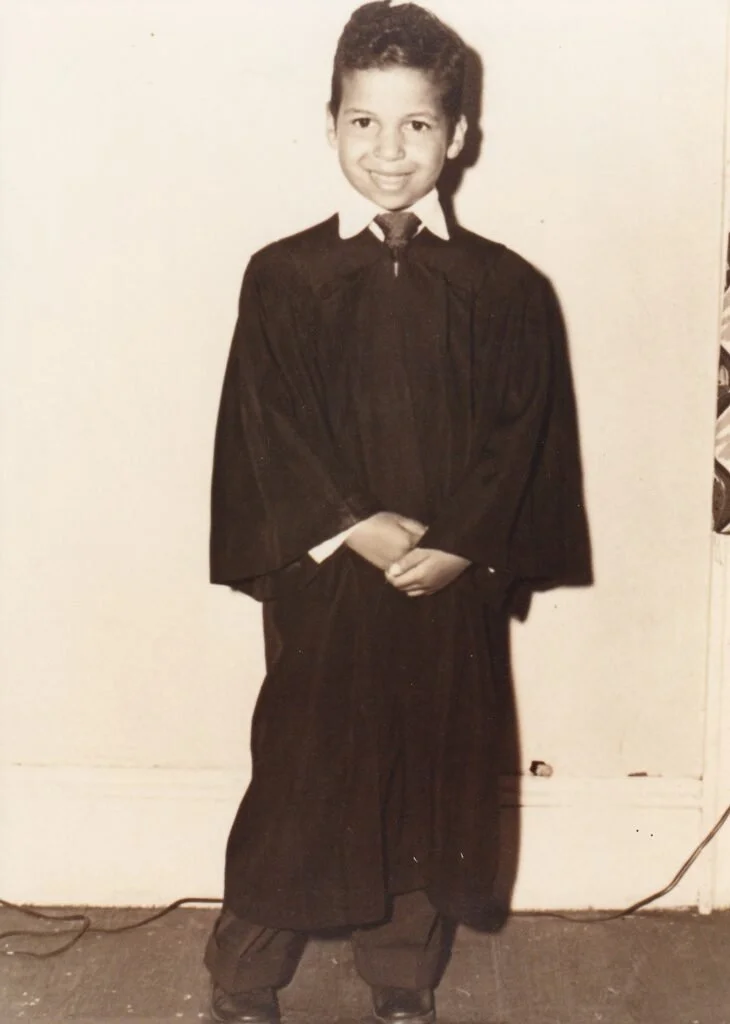
Born in Atlanta, Georgia, and raised in the spiritual soil of the Black church, Richard Smallwood’s love for music was nurtured early on. He would learn how to play the piano at just the age of 5.
After the move to the DMV, his early talent was nurtured through church and school, where he began to step more confidently into his musical calling. By the age of 11, while most kids were still learning choir parts, Smallwood was handpicking voices from the junior choir to start his own choir. Giving us a glimpse into the musical architect he was already becoming.Before attending Howard, he studied music at D.C.’s Roosevelt High, where one of his early mentors was none other than Roberta Flack.
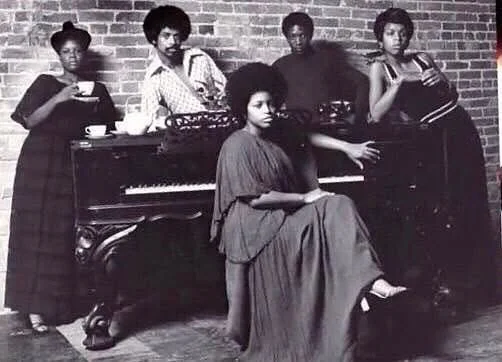
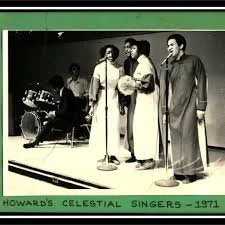
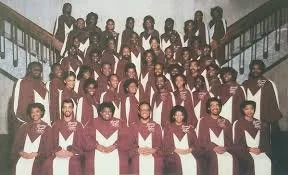
As a student at Howard University, Smallwood helped lay a foundation that would reshape how gospel was received in academic and global spaces. He was a founding member of Howard’s first gospel group, The Celestials, who were reputed to be the first gospel group to perform at the Montreux Jazz Festival in Switzerland. Truly a groundbreaking moment for sacred music on an international stage. He was also one of the founding members of the Howard Gospel Choir, a group born out of a desire to create space for praise and worship music in an institution that hadn’t always recognized its artistic legitimacy. At the time, the College of Fine Arts didn’t consider gospel to be on the same level as classical or jazz music. Richard and his peers challenged that narrative. His presence and leadership made space for gospel to be respected within the walls of academia without compromising its spiritual depth.
By the time Richard Smallwood finished at Howard University, he had already pushed boundaries and helped gospel music claim space in academic halls that once tried to overlook it. However, the real call on his life was confirmed after seeing the Hawkins Family and Tramaine Hawkins perform live in concert. He once shared that it was at that moment he knew without a doubt what he was called to do. To create music that moved people the way that performance moved him. Sometimes, it takes witnessing someone else’s anointing to fully recognize your own.
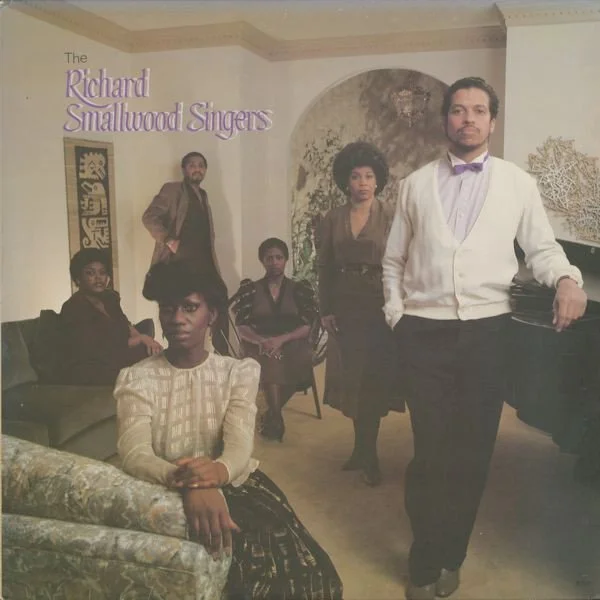
The Richard Smallwood Singers (1982) The debut album spent 87 weeks on the Billboard Magazine's Spiritual Album sales chart.
In 1982, that clarity took form with the release of his first recording with The Richard Smallwood Singers. That debut album set the tone for what would become a legacy of intentional, spirit-filled, and musically masterful work. Songs like ‘I Gave It Up’ and ‘Calvary’ introduced the world to a sound that blended worship with classical sophistication.
By the mid-90s, Richard Smallwood had already proven himself as a master of sacred music, but in 1996, he entered a new chapter. One that would solidify his place in gospel history. That year, he formed Vision, a new ensemble that brought together some of the most gifted voices and musicians to carry out his musical mission with even greater depth. That same year, he released ‘Adoration: Live in Atlanta’, an album that would become one of the most iconic live gospel recordings of all time. It was on that project that the world first heard what would become his signature anthem: Total Praise. Now listen, Total Praise wasn’t just a gospel song, it is a worship experience. A final benediction that felt like heaven touching earth. A song that closes services, consoles grieving hearts, and leaves a congregation in tears. You’d be hard pressed to find a Black church in America that hasn’t sung that closing vamp: “Amen… Aaa-men… Aaa-meeen..”
Richard Smallwood with Vision | Total Prasie Live in Atlanta (1996)
